Prospect Volume 3, 2004

Download this volume as PDF

PROSPECT 2004 VOL 3

BEWS’ SCHOOL Mt Eden Collegiate School 1895–1914

Motto: Ni Trop Ni Peu — Neither too much, nor too little

by Christine Black

The Education Act of 1877 provided free education for boys and girls from 5–15 years and attendance was compulsory from 7–13 years. This led to the establishment of a number of private schools for post-primary students, particularly girls. Many parents were keen to find an English ‘public’ school type of education, and although some students were sent back to England, most took advantage of an ever-increasing number of local schools.

Auckland had a number of privately owned girls’ schools by the end of the nineteenth century, and in 1895 Ladies’ College in Remuera, Melmerley College in Parnell and Cheltenham College in Devonport were well known. These were schools with a clear intention to offer students a good general education, taught by well-educated teachers.

The Bews sisters, Kate and May, who had arrived from Scotland in 1885, were asked to establish a girls’ school in Mt Eden. Early on Kate relinquished her position to her other sister, Alice. The sisters were all well-educated. May had studied in France and Germany and spoke both languages. She taught for some years at Miss Williams’ school in Wynyard Street. Kate was governess to an Auckland family.

In 1895 they began with six pupils at Mayfield, 109 Owens Road (the house still looks remarkably unchanged today). The roll increased so rapidly that they moved around the corner into a large, two-storey building in Stokes Road in 1896.

From the beginning there were day girls from kindergarten age upwards, and boarders. Boys were able to attend the kindergarten. The growing numbers, 80 within the first few years, growing to 150, meant that extra buildings and sections in Stokes and Oaklands Roads were acquired over the years. Known as the Bews’ School initially, the name became officially Mt Eden Collegiate, often Mt Eden College.

The first page of a prospectus (c.1908) stated: ‘The aim of the Principals is to impart education in its true and fullest sense, due
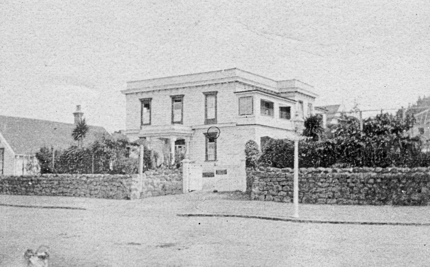
The main school building (from a pupil’s album) taken from across Stokes Road.

attention being given to the individuality of pupils, the training of disposition and formation of character.’

The Bews’ School gained a reputation for up-to-date educational ideas because of their small classes, well-qualified staff and encourage-ment to pupils to sit exams. The school, which quickly developed a reputation for scholarship, offered a full curriculum designed to prepare senior girls for the Civil Service Examinations (equivalent to University Scholarship today). The prospectus stated that the curriculum com-prised English in all its branches, mathematics, Latin, French, drawing and painting, class-singing and needlework. There was a school orches-tra and opportunity for individual music lessons. Girls were prepared for the Royal Academy of London music exams. Artists could enter work in the British Drawing Association competitions. A dress-making class was available one afternoon a week.

In the early days school wear was a navy suit for seniors and gym tunic for juniors with a boater hat and white blouse. In 1911 a more individual uniform was introduced with a blouse with brown collar and cuffs, and a Mt Eden College hat badge with a blue and silver hat-band.

Boarders, whose ‘comfort and happiness are especially considered’, were housed in several houses in Oaklands Road. In addition to a
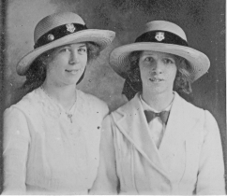
Mt Eden College boarders in summer uniform, c.1910.

school  uniform,  boarders required a cream serge costume (sac coat and skirt), a navy costume, a white muslin dress and two sailor hats. They also brought three each of sheets, pillow-cases, towels and servi-ettes, and a rug.

Bicycles and ponies were common forms of transport, and many caught the Mt Eden Road tram which dropped them at Cuckseys Corner. A horse-drawn  school  bus  collected pupils in Remuera and Parnell at their home gates and returned them in the afternoon.

Games and physical exercise were considered an important part of a young woman’s education, and the girls played cricket, hockey, tennis and basketball. A prospectus notes that ‘There are croquet lawns and an asphalt tennis court, also cricket and hockey ground.’ All pupils learned to swim in the school’s own pool, famous for the cold, dark-looking water. Swimming lessons cost 10/6d. The swimming sports programme from 1907 includes a duck race, long dive, corfu dive, novice and championship races. Senior girls could take golf lessons at the Auckland Golf Club, Middlemore. Mt Eden College was the first girls’ college to introduce an annual sports day. The first sports day was included in the prizegiving function at the Domain in 1905. Prizegiving became an annual event with musical items.

Fees are listed as £60 per term for boarders, 4 guineas for Upper School, 3 for Middle School, 2 for lower and 1 guinea for the kindergarten, which included boys.

By 1912 it had become the largest private girls’ school in New Zealand with a roll of 210 including 43 boarders. The Bews sisters realised the school needed improvements to buildings and facilities beyond their means. The school was sold to the Auckland Presbyterian College for Ladies Ltd (which became St Cuthbert’s College) in 1914.

The Bews sisters moved to Huapai after their retirement and were active in St Chad’s Anglican Church. They also bred champion Jersey cattle. Miss Alice Bews died in 1938 and Miss Mary Ellen Bews in 1945. St Cuthbert’s College remembers its beginnings with an annual Bews Prize, the Bews Collection of NZ Reference books and the Bews Bell in a bell tower which is rung by the leavers on their last day at school.

SOURCES

Mount Eden College 1895–1914. Written for Old Girls Association, 1974. Craig, F. L., The History of Mt Eden College 1895–1914. Written for Auckland

Historical Society, 1964.

McLean, Rosalind, ‘Bews, Mary Ellen 1856–1945’, in Dictionary of New Zealand Biography, Auckland University Press, updated December 2003.
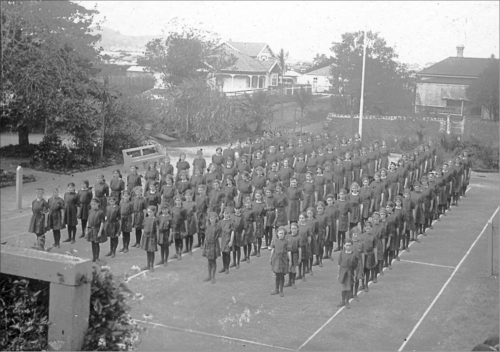
Pupils assembled on the tennis court on the western side of the main building.
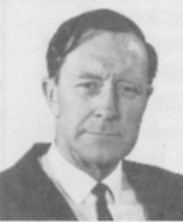
Dr Bruce Golden MBE, 1922–2002

by Jeanette Grant

Although few of his patients probably realised it, when they had an appointment with Dr Golden they were with a man who made a lifetime contribution to safety in the air. His medical practice was only

Dr Bruce Golden


one aspect of his professional life. His links with the RNZAF and aviation medicine meant that his expertise had the potential to affect every New Zealander.

Bruce Robert Noel Golden was born in Bayswater on 3 January 1922, the third child and younger son of William Robert Golden (1880–1950) and Olive Florence née Rykers (1893–1952). He was educated at Remuera District School (1927–35) and Auckland Grammar School (1936–9). He left school with University Entrance, and his first job was as a draughting cadet for Daniel B. Patterson, architect. He started doing a part-time architectural course at the Auckland College of the University of New Zealand, but the advent of World War II changed all that.

He applied to join the RNZAF in June 1940, but an attempt to join the aircrew was frustrated by the detection of his longsightedness. On his third try he was finally accepted as an Aircraftsman Second Class attached to the medical section in September 1940, and served as a Medical Orderly from 1940–6 at Ohakea, Nelson, Te Rapa, Espiritu Santo (Vanuatu), Whenuapai, Waipapakauri and Masterton. He was with No.3 GR Squadron Pacific 1942–3 and the RNZAF Aviation Medicine Unit 1976–8.

In May 1945 he was posted to No.1 Stores Depot, Te Rapa, where he met nurse WAAF Miriam Wakefield Bristow. On 22 November 1947 they were married in Marton at the same church where her parents had married. They had three children: John Robert Golden, 1948; Paul Medworth Golden, 1951; and Virginia Wakefield Golden, 1953.

When the war ended, both Miriam and his parents encouraged Bruce to apply for entrance into the Otago Medical School. However there were more applicants than could be catered for and he missed out on the first ballot. He sat his Medical Intermediate in March 1946 and then began his training at Otago Medical School. The family lived in Dunedin for six years, and in 1952 he graduated from Otago University MB ChB. While studying he also worked at times for Fletcher Construction, building linseed bean silos, and as a taxi driver for Dunedin Taxis Ltd. In 1953 they moved to Claudelands, Hamilton, while he did his postgraduate year at Waikato Hospital.

Dr Golden then moved his family to Dominion Road and later to 24A (now 28) Grange Road, Mt Eden. From 1954–69 he had a general medical practice at 1335 Dominion Road, Mt Roskill. However he never lost his interest in aviation. In 1969 he moved to Wellington as Senior Medical Officer Civil Aviation Division, Ministry of Transport. In 1971 he spent six months in the UK and became the first New Zealander to obtain his Diploma of Aviation Medicine from the newly established RAF Institute of Aviation Medicine at Farnborough.

He was based in Wellington until 1974, when he went into general practice on Waiheke Island from April to June before returning to Auckland to buy a house in Coronation Road, Epsom. He remained the Civilian Medical Officer at the Whenuapai Air Base, the doctor for the New Zealand Railway Workshops at Otahuhu, and the Medical Officer for Air New Zealand, Mangere.

From 1976–8 he was the Commanding Officer of the RNZAF Aviation Medicine Unit. Some of his other qualifications were Member of the Royal NZ College of General Practitioners 1980, Member of the NZ College of Community Medicine 1981, Fellow of the Australasian Faculty of Public Health 1994. He was an active member of the Aviation Medical Society of Australia and New Zealand, the International Aerospace Medical Association and the Royal Aeronautical Society.

He returned to his original Dominion Road medical practice from 1978–86. He was also Honorary Physician and Surgeon to Their Excellencies Governor General Sir Dennis and Lady Blundell, and he continued to do pilot medicals for Civil Aviation while he was in private practice. From 1980–2 he was a lecturer and examiner for the St John’s Air Attendants’ Certificate and examiner for Civil Aviation Dept, RNZAF and the Regional Medical Assessor for the Civil Aviation Division, Ministry of Transport.

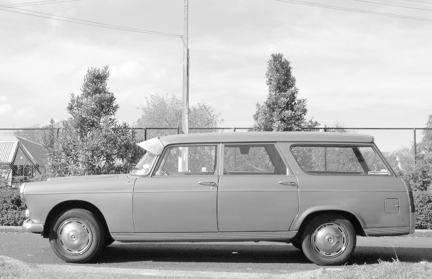
Life however was far from all work. He was a life member of the Dog Protection Society, and the Eden/Epsom Probus Club news editor for many years. In 1979 he attended the inaugural meeting of the Peugeot Car Club (Auckland) Inc in the old Campbell Motors premises in Queen Street, and became the new club’s first secretary. He was for many years the proud owner of a Peugeot 404SW which served him as an ambulance on more than one occasion. This was eventually replaced by a 504 saloon which had the advantage of a conventional boot where medical equipment could be locked more securely out of sight. Altogether, he and Miriam owned eleven Peugeots at different stages,

A Peugeot 404SW, the model which Bruce Golden used on occasion as an ambulance.

from the 203 to the 504 model. However, the Rainbow Warrior affair so upset him that he resigned from the club — without however parting with the current Peugeot.

He was the author in 1988 of Get ’em in the Air: Medical Answers for Aviators. This is a light-hearted but very practical guide to general fitness. A brief quote may give an indication of the spirit in which it was written: ‘Long before air conditioning was thought of, everyone was running around with a marvellous little air conditioning unit, requiring virtually no maintenance, stuck on the front of their face . . .’. In 1989 he received the MBE for services to aviation medicine.

In 1997, after eight years of research, his major work Joint Venture: Aviation Medicine in New Zealand was published with support from the NZ branch of the Aviation Medical Society of Australia and NZ. It is an historical account ranging from Richard Pearse’s 1903 attempts at flight to the 1990s, and is enlivened by many vivid anecdotes and thumbnail biographies of the personalities involved in both military and civil aviation, as well as medicine.

He and Miriam lived in Coronation Road, Epsom, from 1974 to 1990. He had retired in 1986 and they decided to move to Arkles Bay, Whangaparaoa, to be closer to some of their family. He kept a diary all his life, and in retirement both he and Miriam found much pleasure in revisiting his earlier years in this way, deriving much mirth from anecdotes which made this writer realise he had a great sense of the ridiculous.

He was also an active member of the RSA, and after his death from cancer on 17 June 2002, a private family service was followed by a gathering of family and friends at the Silverdale RSA to celebrate a remarkable life.

SOURCES

Miriam and Virginia Golden: interviews

Golden, B., Get ’em in the Air: Medical Answers for Aviators, Palmerston North, Dunmore Press, 1988.

Golden, B., Joint Venture: Aviation Medicine in New Zealand, Waimauku, NZ, L.J. & C.M. Thompson, 1997.

NZ Dictionary of National Biography, Auckland & Wellington, Auckland University Press, Dept of Internal Affairs, 2000.

The Cornwall Park Olives: their failure — a hypothesis

by C.E. Keith Fuller

The metal information tablet which identifies the site of Sir John Logan Campbell’s olive grove reads:

This grove of Olives originally comprising 5000 trees was planted by the late Sir John Logan Campbell in the late 1860s. It was Campbell’s intention to start an oil industry with the fruit from the grove.

Regretfully the majority of the Olive trees planted were of poor quality many proving to be sterile. So Campbell’s hope of an oil industry was ruined. Some 200 trees remain in the grove today, with a small number bearing fruit each autumn. Olives have been successfully grown throughout the Mediterranean. More recently, they have been successfully grown in Marlborough and Hawkes Bay for commercial oil production.

The tablet also shows a scene of the olive grove in 1892. However, the statement on the tablet reading ‘the olives were planted by the late Sir John Logan Campbell in the late 1860s’ needs correcting. Professor R.C.J. Stone in his book The Father and his Gift says, ‘they were planted in the late 1870s’ (possibly 1879).

Even by today’s standards, this was an ambitious undertaking. Measurement of the distances between some of the remaining trees shows that they were ‘square planted’ in rows 18ft (5.4m) apart. To plant one acre, 134 trees would have been needed; for the 5000 trees said to have been planted, 37 acres (15 ha).

Interestingly, talk nationwide in 1877 was of the need to find and develop new crops with export potential. One hundred and twenty-six years later, the growing of olive trees for processing and oil production is again considered to be a promising possibility. Campbell is believed to have continued to make further experimental plantings of different olive cultivars (varieties) until 1883 without success.

The olive

The origins of the olive (Olea europea: of the Mediterranean) remains uncertain. Some think that its original home is probably Asia Minor

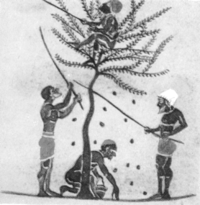
Gathering olives by beating the trees, as illustrated on a Grecian vase of the 6th century BC.

From The story of plants and their uses to man.

and Greece; others say, ‘it first grew wild in a region limited by the Caucasus [mountains in the USSR] the coasts of Syria and Palestine and that from these regions it spread into Egypt, Asia Minor, North Africa, Greece, Western Europe, and other countries further afield.’

The earliest Hebrew books men-tion it, and it was known in Greece and perhaps Sicily in the time of Gathering olives by beating the trees, as illustrated on a Grecian vase of the 6th century BC.

From The story of plants and their uses to man. 

The tree

Homer (about 900BC), to the Romans as early as 600BC, and possibly cultivated by the Semitic people as early as 3000BC.

Olive trees bear fruit from about five years of age, reaching full fruiting capacity when fifteen to twenty years old. To crop regularly olives need a climate which will provide a long hot summer and a cool to cold winter. Winter chilling is essential to initiate the formation of flower buds. No chilling results in reduced flower and lowered fruit yields.

Winter chilling is not a matter of woody perennial plants being subjected to a couple of frosts. It is a complex physiological process, required by most deciduous woody perennial trees and vines, which require an ongoing period of time (duration) of cold temperatures to break their winter dormancy and initiate flowering. It is believed olives need to be subjected to winter temperatures of between 4°C and 7°C for 50 to 1200 hours depending on the cultivar. As a consequence, the amount of time their flowers will be exposed to windborne pollination will be increased — the consequence thereof increased fruit set.

Auckland’s humid sub-tropical climate would not meet the above criteria. M. Ponder, in The Good Oil, quotes First of Trees author Robert Standish, who writes: ‘. . . the olive detests damp, humid conditions, and where it survives, changes its whole character’. The writer is of the opinion that the basic reason for Campbell’s olive cultivars not cropping to expectation was the lack of winter chilling, this inadequacy causing in the spring poor bud break and scanty flowering.

The flower and fruit set

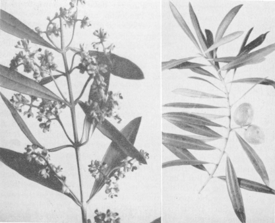
The flower clusters are borne in late spring in the leaf axils of one-year-old wood (last year’s growth) — see picture. The flowers are small and may be perfect (complete) with two stamens and a pistil, or staminate (incomplete) having stamens but no pistils (female organs). In some

Olive inflorescence at left, fruit at right.

Photos: C.A. Schroeder, from Evergreen Orchards

by W.H. Chandler.

cultivars the percentage

of flowers on an olive tree is so large that a high proportion of fruit-less ones may not in-fluence the size of the crop, unless abortion due to an unfavourable environment causes ex-cessive abscission of flowers or young fruits. About one flower in twenty will produce an olive crop. Pollen is wind-borne and is shed in  great  abundance, usually during the hottest part of the day. Cross pollination between cultivars is considered to be essential. Did Campbell make provision for cross pollination between cultivars to take place? Bees do visit flowers but do not seem essential to pollination.

Unfavourable spring weather also seems to account for failure to set olive fruit. A prolonged wet spell during flowering time can be disastrous. Auckland’s humid climate may also have favoured sporadic outbreaks of Olive Leaf Spot (also known as Peacocks Eye or Peacock Spot) by the fungus Spilocea oleaginea. Campbell could have planted olive cultivars susceptible to this disease (all are subject to infection). Infected leaves fall prematurely, which in turn weakens and kills small shoots, and eventually productivity is reduced.

The venture

To bring about his olive oil venture, Campbell imported from South Australia 5000 olive tree seedlings. These were planted into nursery rows, and ‘grown on’, to a size which would allow each seedling tree to have grafted onto it a known olive cultivar (the scion variety). When large enough, these grafted trees would be planted out into the fruiting grove. Enquiries have failed to unearth the names of the cultivars Campbell imported, and on which he was relying to establish an olive oil industry in New Zealand.

Doubt too has been expressed as to whether the grafting wood of the olive cultivars, which Campbell is said to have imported from Australia, were ‘true to type’, the parent trees having also possibly been grown from seed! Each tree from which the graftwood was taken would not exhibit ‘true to type’ varietal characteristics. The recent interest in grow-ing olives in New Zealand has caused ‘true to type’ new and old cultivars to be imported from Australia, California, Spain and Israel. Cultivars sourced from Israel’s breeding programme seem promising.

Professor Stone in his book The Father and His Gift writes, ‘after uprooting the vines he used part of the former vineyards as an experimental plot of 40 acres in which he transplanted olives instead of utilising Motukorea (Browns Island) for that purpose. As late as 1883 Campbell was still experimenting with new varieties he had imported from Adelaide. In 1892 some of the olives were rooted out and that land was leased to a market gardener Ming Quong to be converted into a market garden.’

Both of Campbell’s ventures into commercial horticulture failed, brought about I believe by Auckland’s warm-temperature climate and its associated humidity. Auckland’s climate ranges from a mean 18°C in February, our hottest month, to 11°C in July, our coldest month, a component which in Campbell’s time would not have been considered as being a limitation to fruit production. The understanding of plant life and their climatic needs — the science of horticulture — was unknown in the nineteenth century. The practice of horticulture was understood, but the science of horticulture, which seeks to explain the practices, solve the problems, and tries to predict the consequence of change — the implementation of new production management techniques for older ones — was an unknown technology.

If the present information about the cultural and physiological needs of the olive tree (Olea europea and its cultivars) had been available to Campbell, would he have tried to establish an olive oil industry in Auckland?

Of interest

The olive is a member of the botanical family called Oleaceae. Another group of plants within this family is the privets. Other groups are the ash, jasmine and lilac. The pollen of the olive in Mediterranean countries and the pollen of the privet in New Zealand is blamed for the seasonal outbreaks of catarrhal and other asthmatic symptoms — hay fever.

As at March 2003, 2600ha of olives are believed planted throughout New Zealand. The expectation is that this figure will increase to 3000ha by 2004. The major plantings are in Hawkes Bay, Marlborough and Canterbury.

Epilogue

An examination of the Campbell Papers as held in the library of the Auckland War Memorial Museum on 13 January 2004 (the olive folios thereof) failed to find the names of the olive cultivars which Campbell imported from Australia. The correspondence did reveal that he dealt with Mr Thomas Hardy of Bankside Nurseries of Adelaide.

The following unsigned, undated, handwritten note found in one of the folios is most interesting:

  1. ‘There is nothing in the LC papers to suggest that Sir John was supplied with inferior This is a myth developed since his day.’
  2. ‘The production of oil and its flavour compared poorly with that of olives grown in traditional areas. This was most probably due to the humid Auckland climate.’

Clearly Campbell was well read on the principles and practices of olive growing, as one of the folios contained authoritative brochures obtained by him from France, California and Australia, as well as newspaper cuttings.

A page from a publication titled The Chemist and Druggist of Australasia, 1 April 1888, lists the following olive varieties as being available in Australia: Oliver Amygdalin, Aglandaou, Picholine, Oliver

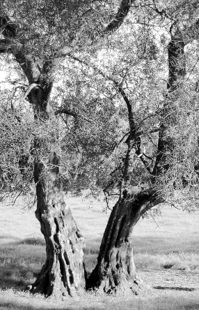
Furrowed trunks of Campbell’s Cornwall Park olives in 2004.

Pleurer, Oliver du Lucque. Were these cultivars available in the late 1870s when Campbell planted his olive groves? (Note: Picholine is still advertised for sale today.) In 1887, on 15 March, Thomas Hardy advised Campbell he was making available to him some trees of a variety called Hardy’s Mammoth.

The personal interests of twice Governor of New Zealand George Grey (1845–53 and 1861–68) re-volved around his Kawau Island home, and the plants and animals he had brought in from overseas. Olives were one of his interests and it has been reported that the planting of his olive grove was well recorded. I quote: ‘. . . for his 13.5 acre (5.25ha) grove on Kawau Island (of which

Furrowed trunks of Campbell’s Cornwall Park olives in 2004.

only a few trees remain) the varieties he introduced from the Sydney Botanical Gardens and the Melbourne Botanical Gardens were Blanquette, Verdale, and Bouquetier from France and some of the finest (unnamed) from Spain were planted in 1866’, thirteen years before Campbell planted his One Tree Hill Estate grove. On 19 August 1881 Grey also gave evidence that ‘he had distributed so many olive cuttings to different people and places, including Australia, that he was unable to take any more without hurting the trees.’ Did Campbell obtain some grafting wood of these named cultivars from Grey?

The remnants of an olive grove believed to have been planted in the 1870s are to be seen on Motuihe Island. ‘In 1872 the island and foreshore was owned by the Crown and used later as a quarantine station for incoming migrant ships, when outbreaks of disease were found.’ Who planted this olive grove? Is it possible that Campbell had a finger in the pie? Campbell and his partner Brown had owned the island between 1843 and 1848. Again, this planting was made six years earlier than Campbell’s grove at One Tree Hill Estate.

SOURCES

Chandler, W.H., Evergreen Orchards, University of California, 1950.

Dal Pero Bertini, G.V., Olive Growing & Processing (Pt 1), R.O.D. Books, Australia, 1960.

Ferguson, L. & G.S Sibbet, Olive Production Manual, University of California, 1994.

Hutchinson, J. & R. Melville, The Story of Plants and Their Uses to Man, P.R. Gawthorn Ltd, 1948.

Leach, H., 1000 Years of Gardening in NZ, A.H. & A.W. Reed, 1984.

1995 Horticulture, (Australia). The Complete Reference of Australian Horticulture Industry, Morescope Publishing Pty Ltd (p.368).

Nightingale, T., White Collars and Gumboots — A History of MAF 1892–1992, Dunmore Press, 1992.

Noser, G., Olives: The New Passion, Viking, Auckland, 1997.

NZ Horticulture Facts and Figures (June 30 2002), Hort Research Ltd, 2002. Ponder, M., The Good Oil: Growing Olives in New Zealand, Blenheim, Wenlock

House, 1998.

Proceedings of NZ Governments Colonial Industries and Tariff Committee 1881, NZ Government, 1881.

Renowden, G., The Olive Book, Canterbury University Press, 1999. Stone, R.C.J., The Father and His Gift, Auckland University Press, 1987. The Campbell Papers (Olive Folios), Auckland War Memorial Museum.

West, B., The Beginners Guide to Growing Olives in New Zealand, Masterton, New Zealand Olive Association, 2001 (3rd edition).

The Queen’s Birthday

by Muriel Williams

Why do we celebrate the Queen’s Birthday on the first Monday in June when she was born on 21 April?

The first known record of Guards being involved with the sovereign’s birthday was in 1748, probably because extra men were required for the state balls which were held to celebrate the occasion. However, in 1768 the Grenadier Guards were ordered to mount guard on His Majesty’s birthday celebration. Then in 1806, on 3 June, the Horse Guards were ordered to parade in Embroidered Cloths for the king’s birthday.

In the early stages, they did not necessarily parade on the actual birthday, but at any time that suited themselves. These parades were not held from 1811 to 1820 because of King George III’s illness; but from the accession of King George IV they became an annual event. In 1910, when King George V came to the throne, the parade was held on his actual birthday, as he was born on 3 June 1865. This continued until 1935, as he died in January 1936.

Edward VIII’s birthday was on 23 June, so the celebrations were held on that date in 1936. However, he abdicated his position as monarch on 11 December, and King George VI became the sovereign. As his birthday was on 14 December, very few functions were held, although we in New Zealand did receive another day’s holiday on that date. So we had three kings, two sovereigns’ birthdays, a funeral and an abdication all in the same year.

It was then decided that 14 December was too close to Christmas to hold the birthday parades on that date, so the ‘powers that be’ decided to go back to King George V’s birthday on 3 June, or the closest Monday, and it has continued on that day ever since.

Of course, if they did hold the celebrations on Queen Elizabeth II’s actual birthday, 21 April, it would be too close to and in fact at times would coincide with Easter.

Prince Charles was born on 14 November, so we will probably stay with 3 June when he becomes king, but Prince William’s birthday is 21 June, so it will be interesting to see whether they change the date of the birthday celebrations at that time!

The Royal Oak Hotel

by Valerie Sherwood

Early residents in Epsom and travellers en route from Newmarket to Onehunga had the opportunity of refreshments at two hotels: the One Tree Hill Inn and the Prince Albert Inn. In January 1854 Edward Kelly, who had been discharged as a sergeant from the 58th Regiment of Foot in 1852, opened another ale-house at what is now the junction of Campbell and Mt Smart Roads at the Royal Oak roundabout. Apart from the travelling public, this hotel would serve the needs of the thirsty from Epsom South to the ‘Top Settlement’ of Onehunga.

Prior to opening day the licensee invited all officers, non-commissioned officers and as many privates who could obtain leave from their garrison duties at the Albert Barracks (much of which be-came Albert Park) and Fort Britomart, to be his guests. Drinks were to be free from 10am to 10pm. Not unexpectedly, this proved to be a hugely popular offer. Brakes and other conveyances brought the senior officers to the new ‘house’, the first brick building in the district. The enlisted men light-heartedly formed companies and marched up Parnell Rise and along Manukau Road to the new hostelry. Undoubtedly, after marching a distance of four or five miles, the men would have worked up a good thirst by the time they arrived at their destination.

Early in the afternoon, when several officers asked the landlord whether he had chosen a name for his establishment, he admitted that he had not done so. After deliberation, one officer pointed out that the young oaks which surrounded the twelve-acre property were a reminder of Old England. He also drew attention to the fine, sunny day, a royal day for a Royal Regiment. The officer declared that the name the Royal Oak would be a fine one for the house. Edward Kelly happily agreed to the suggestion, and calling the company together, invited them to drink a toast to the new name for the establishment. The Bench of Magi-strates at Onehunga authorised registration of the name a few days later. Despite the naming of the hotel, it was often described simply as Mr Kelly’s brick ‘house’.

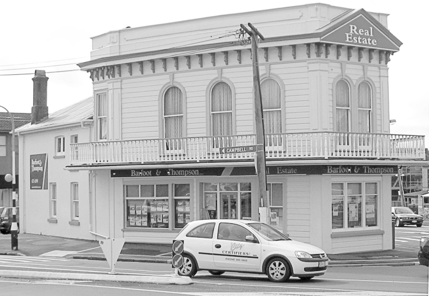
Royal Oak Hotel in 2004.

Rear of Royal Oak Hotel, 2004, showing original brick building.

At the opening Edward Kelly gave a colourful speech, reminding his customers that he, too, had served in many campaigns and that he knew all the needs of serving soldiers. The Pensioners at Onehunga, he felt, had been deprived of the service they had been used to in the canteens of India, China, Spain and Portugal, Bermuda and South Africa. He was happy to be in a position to supply those needs.

The Enrolled Pensioners of the Top Settlement at Onehunga were a useful band of customers. These old soldiers were very fond of their grog, which was a mixture of beer, spices, ginger, and one or two powdered herbs. The mixture was fused together by thrusting a red hot poker into the contents of a stout 40oz pewter pot. The quaffing of hot grog was regarded as the summit of enjoyment. The Royal Oak fireplaces were equipped with a dozen or two pokers and the fires kept alight for this purpose both summer and winter.

The Royal Oak prospered. Drovers, stockmen, drivers of drays and carts, even representatives of ‘the Quality’ thronged to the bars. There was a large amount of traffic on all the four roads which converged at the junction. Carts and wagons with farm produce and merchandise as well as two-wheeled vehicles of the better-off citizens passed on the route. Drivers of these vehicles rested their animals on fields thoughtfully provided by Kelly while they quenched their own thirsts at the bar.

In later years it was on many occasions the meeting place for the Pakuranga Hunt Club. The Hunt provided a colourful scene with settler huntsmen in the correct attire of bright coats and bowler hats. The ladies, with flowing riding habits, rode side-saddle. Milling around between the feet of the horses would be forty or fifty eager hounds. A crowd of sightseers would gather to enjoy the spectacle as the hunt departed on its way across the fields and over the stone wall which marked the boundary to the One Tree Hill estate, owned by Logan Campbell (later Sir John), where rabbits and hares were readily flushed out by the hounds to the accompaniment of the sounding horn. After a successful hunt was accomplished, great platters of sandwiches, hot scones and savouries were consumed, along with ale from foaming tankards, by the flushed and dishevelled but exhilarated riders.

The distinctive red-brick hotel had the capacity to accommodate 200 persons, providing a local venue for concerts and for many a lively political meeting. The first All-Irish Sports in the district were held on Kelly’s paddock at the Royal Oak on St Patrick’s Day in 1872. Several hundred people arrived by conveyances of every description. The English and Scots of the district were present in force and enjoyed the day as much as the Irish. Two booths were set up outdoors for the day by the hoteliers, and business was brisk. The sporting events included hurling the hammer, putting the stone, catching the greasy pig, and pony races. The crowd was reported to have particularly enjoyed the Old Irish folk dances. Also present were several well known ‘pencillers’ who obligingly accepted wagers from one shilling upwards.

Edward Kelly, the proprietor of the Royal Oak, demonstrated an adaptability which made him a successful settler. He had served his time as a bespoke tailor prior to joining the 58th Regiment, and after discharge had set up a successful tailoring establishment in Queen Street. This business was later sold. In subsequent years he displayed his great versatility with another career change. Passing the responsibility for the hotel over to his wife, Anne, he proceeded to undertake construction work. He successfully tendered for several major public works projects, including the reconstruction of Manukau Road from Newmarket to Epsom, and the building of a stone causeway which was an extension to Queen Street, Onehunga. The Royal Oak, with Anne Kelly as licensee, continued to be a popular and prosperous enterprise. Mrs Anne Kelly transferred the hotel licence to John Moore in October 1873, but by Christmas 1875 John Smith was the licensee. The original brick building was soon after damaged by fire, but still stands at the rear of the oddly coffin-shaped wooden building which adjoins it. They both still stand in the twenty-first century, though the staff within deal in real estate rather than alcoholic refreshments.

SOURCES

Auckland Weekly News, January 1854, 18 March 1872, 12 July 1982. Mitchell G.G.M., ‘The Hotels of Onehunga’, in The Manukau Progress, 16

September 1959.

Mogford, Janice C., Onehunga, a Brief History, Auckland, Onehunga Borough Council, 1997.

Herbert Boucher Dobbie — ferns man

by Mary Dobbie

Members of One Tree Hill Domain Board, meeting on 6 November 1919 to consider renewal of grazing rights, had concluded the business when member Herbert Dobbie, chairman of One Tree Hill Road Board, made his proposal that a monument to fallen soldiers be sited on the summit of the hill and that it take the form of an 80ft obelisk. He presented design plans and a photograph of where it could

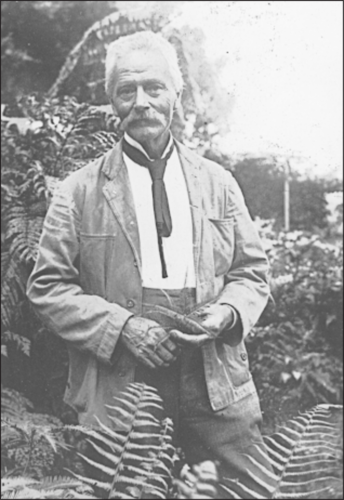
H.B. Dobbie, 1930s?

be placed. After much discussion the proposal was accepted, provisional upon costs being in hand and the work to be commenced within six months and completed in twelve months thereafter.

However, the obelisk that finally rose on the summit of Maungakiekie some twenty years later stood as a monument to the Maori race, reflecting the wish and the bequest of Cornwall Park benefactor, Sir John Logan Campbell.

When Herbert Dobbie died in 1940 he too was the generous donor of a park — on the slopes of Mt Parahaki, Whangarei. Sixteen years of his working life had been spent there before he finally settled his family in Epsom’s Market Road, established his famed fernery and published the book on New Zealand ferns that would become the standard work for many years.

He was twenty-three when he arrived in Auckland from England in 1875. His father, Major H.M. Dobbie, had died on active service in India and the widowed Ellen Dobbie had returned to England with her six children. Herbert, the youngest of three brothers, had chosen to train as a fitter with an engineering firm rather than follow the family tradition of a military career. Within days of stepping ashore in Auckland he had made his way into the Waitakere Ranges and there been captured by the beauty of its fern-filled gullies. As a boy he had collected ferns but what he saw now amazed him with its variety. Five years later, in 1880, he put together his first book of collected fern specimens, known later to botanists as the ‘Blue Book’ for its white on blue photographic plates. Meantime he had worked for an engineering firm, then joined the Railways Department, bought a house in Parnell and in 1880 sent for his mother and sisters Bertha and Mary to join him. That year Bertha married Major F.Y. Goring of the Armed Constabulary but it was her sister Mary’s unlucky fate to be a murderer’s victim while out sketching on a visit to Bertha in Opunake, Taranaki, a crime that rocked the whole colony. Herbert was married that same year to Charlotte Gilfillan. A year later they moved to Whangarei where he took up his appointment as station master and manager of the new line to Kamo.

With trains running only three days a week, he looked for other ways to occupy his energies. He bought land and established Whangarei’s first commercial and highly successful citrus orchard, excavating a tunnel for cool storage of his crated fruit awaiting shipment. He built his own house, carving the barge boards with intricate patterns, and crafting furniture carved with native plant designs. He collected ferns, rode a penny-farthing bicycle and acquired the district’s first typewriter. A competent musician on the French horn, he became conductor of bands in both Whangarei and Kamo, and family legend has it that his downfall with the Railways Department came when he reversed the train to Kamo in order to retrieve the music he had left behind in Whangarei. Unfortunately a government official also travelling to Kamo missed his appointment. After sixteen years as manager, Herbert found himself demoted to a lowlier post at Picton. It had probably been the last straw for railways bureaucrats already irritated that their northern manager had initiated structural design changes to coal wagons without awaiting written permission, innovations later seen as highly successful in their aim of reducing haulage costs.

Herbert Dobbie’s temperament did not fit easily into a bureaucratic system, and in 1900 he left and set out on three years of travel that took him through South Africa, Britain and Scotland. With him went his penny-farthing bicycle (which he rode until it fell apart having clocked up 24,000 miles of service), and ‘Dismal Jimmy’, his French horn. Charlotte and their family of six he left reasonably well provided for from rental of the Whangarei orchard and sale of part of the land. In South Africa he worked for two railway companies, between times studying Rhodesia’s butterflies and making the valuable collections later to be held in British, Christchurch and Auckland museums. He also wrote sixteen novels and some twenty short stories, only one of which found a London publisher. He cycled through England and Scotland before returning to his family and to a more settled lifestyle in Epsom, Auckland. There he bought land and built a large and pleasant home, Ruatotara, at 84 Market Road. He became a proofreader for the Auckland Star, work that gave him insights into printing and publishing.

It was at Ruatotara that his life-long interest in ferns found expression in a fernery that became a focus of interest and a Mecca for fern collectors. In 1921 his substantial book New Zealand Ferns was pub-lished to become not only a defining text but also an easy layman’s read for fern lovers looking for tips on finding and growing ferns. It went into several editions, and copies are still prized by botanists.

When not cycling and tramping in search of new ferns, Dobbie took part in local affairs as a member of the One Tree Hill Road Board (precursor of the borough council) being its chairman in 1919 and 1926, in which capacity he served on the One Tree Hill Domain Board. If his fundraising effort for a soldiers’ memorial on the summit of the hill failed to reach its target (the 1920 War Memorial Museum Appeal being a rival), it served as a hurry-up call to the trustees of the Logan Campbell Estate to make the moves that finally saw an obelisk built.

On the Domain Board, Dobbie predictably crossed swords with fellow members over management of the One Tree Hill water reservoir, and care of the park. Today he might be seen as a conservationist. Concern for the preservation of native bush led him in 1910 to make a gift to Whangarei Borough of forty-four hectares of splendid untouched bush on the western slope of Mt Parahaki. To ensure that Dobbie Park remained unspoiled, the Deed of Transfer contained stern

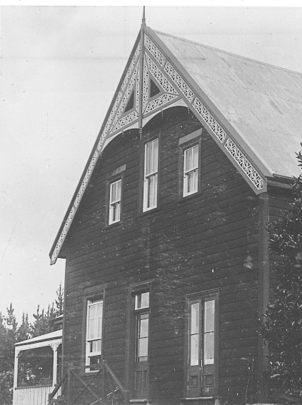
Whangarei home, showing barge boards by H.B. Dobbie.

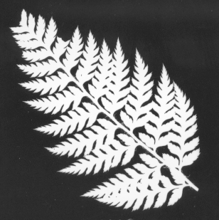
This silhouette was made partly by the same process that H.B. Dobbie used to produce his Blue Books. A fern frond was placed under a glass plate with a piece of photographic printing paper beneath. It was exposed to the sun for about thirty seconds before being developed.

strictures that forbade swinging on or climbing of its trees, disturbance of its soil, planting or tolerating of non-native plants, and even the directive ‘No person shall behave in a riotous, improper or indecent manner or use foul or abusive language upon the said land.’

Herbert had an innovative mind and a boundless capacity for work, but he could be intractable — things had to be done his way. Domestically he was the autocratic head of the house, a stickler for correct speech, table manners and family rituals. With all six children required to learn a musical instrument, he could enjoy conducting a family band. That his daughters grew to be women of unusual spirit and independence suggests some benefits from their father’s frequent absences from home. Daughter Agatha, a competent pianist and violinist, enjoyed overseas travel, and was an accompanist for silent movies. She married James McNeil, and the couple lived in Epsom and were known for their musical evenings. Agatha rode a motorbike well into her seventies. Nell trained as a physiotherapist, unusually for her times, and worked from Market Road.

Beatrix studied painting in London and returned to illustrate Guthrie-Smith’s book Tutira and to become one of New Zealand’s best known artists. She chose to be known by the older Scots version of the family name, Dobie, a spelling discarded by her grandfather the major for its unfortunate similarity to dhobi, the word for an Indian washerman. She travelled widely, often on horseback, was a crack shot with a pistol and married an officer of the French Foreign Legion, living for the rest of her life in Tunisia. Herbert’s only son, Hugo Dobbie, became a civil engineer.

Herbert died aged 88 and Ruatotara, the Dobbie home in Market Road, was eventually acquired by St Cuthbert’s College and finally demolished in 1991 to make way for new buildings. Examples of Dobbie’s wood carving, his fern photography and a first edition of New Zealand Ferns were accorded a year-long display at Auckland’s War Memorial Museum in 2002. Whangarei Art Museum also mounted an exhibition that brought together works of both Herbert and daughter Beatrix.

(With thanks to Professor J.D. McCraw, New Zealand Journal of Botany, 1988,1989.)

Lava caves: fact or fancy?

by Jeanette Grant

Few Auckland residents realise that they are living over the top of the most active ‘hot spot’ in New Zealand. Auckland is notable for both the number of volcanoes in such a small area and for the small size of the individual cones. Over the past 2.7 million years the hot spot responsible has moved 100km north from the Raglan Harbour region. Between 1.6 and 0.5 million years ago it produced the Franklin Volcanic Field which stretches from Papakura to Pukekawa and Waiuku to Hunua, creating the rich soils which make this Auckland’s vegetable garden. The hot spot then lay dormant for 350,000 years before bursting out again as the Auckland Volcanic Field. This consists of at least forty-eight volcanoes which have erupted approximately three cubic kilometres of material, mainly olivine basalt, within a 15km radius of One Tree Hill. The most recent is Rangitoto, around 1400AD, but there is no scientific evidence to say it will be the last, particularly as some experts expect the field to have a life of one million years. Between them, Rangitoto and One Tree Hill have produced almost sixty percent of the lava.

Auckland volcanoes are of the ‘monogenetic’ type. Each volcano has resulted from a single eruption or at most a short series of eruptions that probably lasted no more than ten years. As there is no large magma reservoir beneath them, they will not erupt again. However, one day a new bubble of athenosphere magma will be thrown off by the hot spot and rise through the 23km-thick rock of the lithosphere to the surface. A small bubble may produce a single explosion; a larger one will go on to produce scoria cones and maybe lava flows.

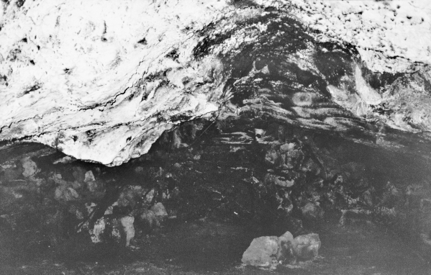
Auckland, alone in New Zealand, has lava caves. These are a charac-teristic of the ‘pahoehoe’ type of lava flow. This name comes from Hawaii and is used to describe the basaltic gas-charged lavas with temperatures close to 1200°C, which are very fluid and tend to flow smoothly. As the lava flows downhill, the exterior of the flow cools and a thin glassy crust forms. Solidified basalt is a good insulator so the hot fluid lava continues to flow inside and may travel long distances without losing much heat. Black Reef is a tongue of lava which was sufficiently hot to travel for 10km from Three Kings in the liquid state. When the lava supply dwindles, this molten material may drain out completely leaving an empty tube. Hot gases usually fill the space between the top of the flowing lava and the cave roof. These remelt the cooled basalt lining, giving it a glazed appearance. This remelted lava may drip from the roof and form lava stalactites as much as 50cm long, while drips from the last flow may even create stalagmites on the floor. If the lava supply is irregular and refills part of the tube, solidified surge benches may form alongside the walls of the tube like high tide marks. Entrances are usually created by the partial collapse of the roof, and the lines of former tunnels may be revealed by rows of pits or block-strewn ravines where the roof has collapsed. On the whole, lava caves are comparatively dull and unattractive. They can also be difficult and dangerous to penetrate as the floors are often heaped with blocks of basalt fallen from the roof.

The first known published reference to lava caves at Three Kings is by Taylor in 1850, and the following year when William Fox’s The Six Colonies of New Zealand was published he noted on the very first page that:

. . . the most marked traces of igneous action are to be seen in the neighbourhood of Auckland, where within sight of the town are 29 or 30 extinct craters, of various elevations up to 300 or 400 feet: some of them, as Mt Hobson and Mt Eden, in a state of great perfection. Around them, on every side, lie masses of scoria, varying in size from vast blocks to mere marbles. Curious caves are interspersed occasionally, as at the ‘Three Kings’, which have been used as catacombs by the natives and are full of dead men’s bones.

The longest known lava cave is the Kazamura Cave in Hawaii which is 30 miles long. Of Auckland’s thirty known caves, the longest is the Wiri Lava Cave. It runs 290 metres from a narrow chimney at the base of Wiri Mountain and has the classic ‘Gothic Arch’ shape where the pressure of the surrounding solidified lava has caused the ceiling to sag and a distinct apex to form.

According to Geoffrey J. Cox in Fountains of Fire:

This cave was in danger of being destroyed by quarrying. However an agreement has recently been reached which should see it preserved for the future. More readily accessible are several caves on Rangitoto, but many other Auckland volcanoes possess caves. A number from One Tree Hill run under Cornwall Park while one on Mt Albert terminates unexpectedly in a cupboard at the back of the garage of a private house.

G.L. Pearce says in The Story of New Zealand Volcanoes:

Often the unsupported roof collapses but there are many long narrow tunnels still to be found in the Auckland lava sheets.

One cave system in a lava flow from the Three Kings is extra-ordinarily extensive with long passage-ways which in places enlarge to form wide caverns up to five metres high. Others are known to exist, but are so choked with debris that it is impossible to enter them. In a small one near Mt St John, although it is filled with jumbled blocks of scoria from floor to roof, the draught of air blowing through is too strong for a match to stay alight!

It is easy to forget that these caves exist under the city. A few years ago the petrol from an underground tank at a garage in Epsom was found to be decidedly warm, arousing speculation as to whether it indicated a renewal of volcanic activity in the Auckland area. However fears were allayed by the discovery that the tank was situated close to a cave into which a nearby factory had been discharging boiling water.

In 1859 the visiting Austrian geologist Ferdinand Hochstetter dis-missed lava caves as just giant bubbles in the lava but one of his field assistants, James Stewart, explored the area around Three Kings and surveyed the cave which now bears his name. He mapped it and read a description to the Auckland Institute on 20 September 1869. His account appears in the Transactions and Proceedings of the Auckland Institute, 1869, Vol. 2. In his own words:

The number of distinct caves in this group, at present explored, is four. They form two sets, of two each. The two pairs have a remarkable resemblance to each other in some distinctive features; the branches return backwards, at low levels, and they just escape communication with each other.

This rambling cave lies underneath several private residential properties at 82a & 84 Landscape Road, 19 & 25 Fulljames Avenue, 6, 8 & 10 Barclay Avenue, Mt Eden. There is no organised tourist access to any lava cave although the ‘Thumbs Up Adventure Club’ advertised a walk on their website in 2003, and the University of Auckland’s Geology Dept is known to arrange guided tours for geology students. In their terminology Stewarts Cave is described as:

. . . a system of overlying and interconnected lava tube segments that total about 180m in length. The entrance is about 80m above sea level and about 200m from the volcanic vent. The main passage of the cave (up to 14m wide) ends at a roof-sag ring-passage. The arched ceilings (up to 8m high) vary in shape, and cooling fractures are visible in the rock. Natural roof collapses have formed the entrances and there are many rockfalls from the ceilings. In the southern branch there is an unusually-shaped, large chamber (terminal lobe). The geologically interesting features of this cave are: three interconnected lava tubes, multiple levels, some large passage cross sections, some unusual irregular ceilings, a cave-in-cave, lateral flow-kerbs, flow-level benches, floor-to-wall clefts, curved flow wrinkles, lava driblet stalactites and very small secondary deposits of calcite and opaline silica. This cave is one of seventeen known along the Three Kings lava flow.

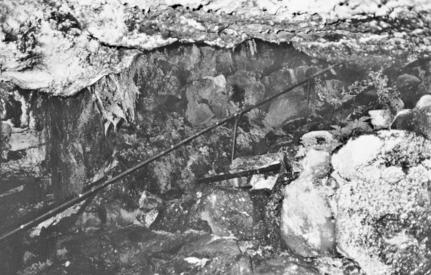
Another much smaller cave also underlies 104, 106, 117,119 & 121 Landscape Road. One family has owned the property with the entrance since 1948, and when they bought it the garden was just a mass of raw lava rock. Today it has been levelled and grassed. When you walk to the back of the gently sloping section and look back towards the house, a short path slopes down to a sunken area where an irregular lens-shaped entrance draped in ferns is revealed.

Access is simple, as during World War II the previous owners of the property envisaged its possible use as an air raid shelter. A dozen rock slabs were placed to form a crude but effective staircase with a pipe hand

Lava cave entrance, Landscape Road.

rail attached to the cave wall. The loose rocks on the floor of the outer section of the cave were laboriously moved and stacked at the side of the cave, and gravel brought in to provide safe footing. Caves in Ellerslie were also identified as places of shelter in case of aerial attack.

The cave itself is about 10 metres wide and 3 metres high in the middle. A compass reading shows that it extends at sixty degrees to the north-west. About 10 metres in from the entrance is a pile of dirt and rocks which have fallen from the surface through a blowhole. This would once have let light into the cave, but is now under a neighbouring house. This heap effectively separates the outer tidied cave from the inner untouched section.

The inner cave extends at least twice as far but the floor is a tumbled mass of loose rocks, typical scoria full of air bubbles and grey-brown in colour. The roof is much smoother and in places either coated shiny white or speckled with ‘gold’ flecks. The inner cave narrows gradually and the roof slopes down. About twenty metres further in it reduces to a crawl-sized tunnel which, as far as the owners know, has never been explored.

In the City of Auckland District Plan isthmus section — Appendix 3b — is a ‘Schedule of geological features’ which includes some lava caves. On the site of Highwic House is the Mortimer Pass Cave, described as a lava rift cave. Some caves have names — the ‘Mt Royal Lava Cave’ under Mt Royal Avenue & Pickens Crescent, Owairaka; the ‘Motor Holdings Lava Cave’ under Fraser Road, Mt Wellington; the ‘Cave of 1000 Press-ups’ under 205 & 207 Campbell Road, One Tree Hill; the ‘Helena Rubinstein and Pt Ratcliffe Cave’ under George Street & Church Street, Onehunga; ‘Scotlands Cave’ under Grey Street and The Mall, Onehunga. Incidentally, Onehunga means ‘burial place’, a reference to Maori burial caves in the area.

Not all have names. There is an anonymous one on the corner of New North Road and McLean Street in Mt Albert, and apart from Stewarts Cave in Landscape Road the others in Mt Eden are unnamed. They are listed as existing at 92 & 92a Marsden Avenue, and under 94–106 & 109–115 Shackleton Road and 112–114 Peary Road.

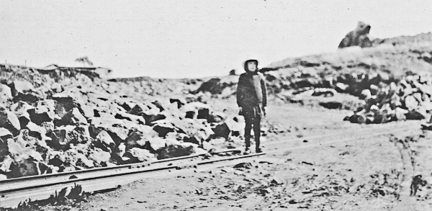
Others exist outside the Auckland City boundaries. As well as the Wiri Lava Cave, there are several at Ambury Park, Mangere. There must be many more whose existence has never been discovered as well as those which have been destroyed or their entrances concealed. An example of each circumstance comes from opposite sides of St Andrews Road, Epsom. The area which today is Melville Park was, until cleared and grassed during the 1930s Depression, a wilderness of rocks, fern and gorse infested with rabbits, pheasants and quail. In the words of Eric Williamson and his sister Nancy Kennedy who grew up next to it:

In Melville Park, between 22 St Andrews Road and where the Pavilion is in the park today, was a substantial crater-like depression, since about two-thirds filled-in, in which there was a cave about the size of a large room. Likewise in the Normal School grounds just to the left from the St Andrews Road

The site of Melville Park before development.

Note the rails for wagons which were used to remove rock.

entrance was another. Unemployed men were given the job of clearing the reserve, filling in the hollows and levelling the ground. The single men received wages of 10/- and married men £1 pound per week. A little railway line was put down, small wagons were filled with rocks (of which there were plenty) and eventually the rocks were tipped into the gully.

In a letter written to a young neighbour in 1980, Groves Teal of 28 St Andrews Road said:

In the Training College grounds, probably in the 1860s, there used to be a large hollow known as ‘the dell’ where a British garrison of soldiers was camped. They were there to keep an eye on the Maoris living on Maungakiekie and to keep the peace. They made a wide trench from the dell to your house (No. 30) and it is now my basement. The soldiers had a big cannon on wheels which in the morning was dragged along the trench and hidden behind a huge rock which used to stand up about ten feet or more above the ground at No. 30. It stood up like a huge fish fin and when broken up it took several lorry loads to take it away.

On the opposite side of St Andrews Road, Joan Butler (née Sargent) recalls that:

When my father bought the section it was covered with gorse and scoria. The largest boulders he rolled to the footpath to form a boundary wall which no longer exists. A few years later he bought the adjoining section from the Brownes who lived in the old villa next door (now 9 St Andrews Road but then 65 Disraeli Street). On the right of No. 15 and below what is now a lounge, my father discovered a large cave full of skeletons. It seemed to extend a long way down and he was told it linked up with caves at Three Kings. Needless to say, when he found human remains he swiftly filled in as much as he could and blocked up the entrance.

The idea that caves were linked and it would be possible to travel long distances underground seems to have been very common. Maurice Gee used it in his children’s book Under the Mountain (later a TV series), but unfortunately there is no evidence of lava tunnels on the scale of those found overseas, as the volcanic episodes in Auckland were too short-lived to produce them. Not all are of the tunnel style. Many small caves have been reported from Landscape Road, Disraeli Street, etc.

It is certain that Maori were well aware of many caves and no doubt made use of suitable ones for shelter or for burials. When plans were drawn for the erection of the National Women’s Hospital, local Maori warned that they had stories of a large cave on the site. Test drilling revealed nothing and the building began. A small cave complete with bones was uncovered during foundation work and it was assumed that this was the basis of the story. The building was completed. Then came vindication of the tradition. A workman preparing to lay a path was using a crowbar to remove a lump of concrete when the crowbar disappeared into the ground. Investigation revealed the existence of a large cave extending directly under the front wall of the building. Cementation Construction were called in and spent 24 hours a day for a month pumping grout under pressure into the ground to seal the interstices of the rocks and fill the cave.

So, if you have been told about caves around your property and dismissed them as myth, take heed. They do exist in various sizes and many locations. You too may have one at the bottom of your garden.

SOURCES

City of Auckland District Plan, isthmus section; appendix 3B — Schedule of geological features.

Cox, Geoffrey J. & Bruce W. Hayward, The Restless Country: Volcanoes and Earthquakes in New Zealand, Auckland, Harper Collins (NZ) Ltd, 1999.

Fox, William, The Six Colonies of New Zealand, London, John W. Parker & Son, MDCCCLI.

Hayward B.W, & B.J. Gill (Editors), Volcanoes and Giants, Auckland Museum, 1994.

Kermode, Les, Geology of the Auckland Urban Area, Lower Hutt, Institute of Geological and Nuclear Sciences, 1992.

Pearce G.L., The Story of NZ Volcanoes, Auckland, William Collins (NZ) Ltd, 1977. Scarth, Alwyn, Volcanoes: An Introduction, London, UCL Press, 1994.

Searle, E.J., City of Volcanoes: A Geology of Auckland, Auckland, Pauls Book Arcade, 1964.

Stewart, James, Transactions of the NZ Institute, Vol.2 (1869), pp.162–163.

Websites

www.aucklandcity.govt.nz      www.arc.govt.nz/volcanic www.ellerslie.net.nz                                                  www.mangeremountain.co.nz

Individuals

Joan Butler (née Sargent), John Grant, Nancy Kennedy (née Williamson), Margaret List (née Munro), Bill Lewins, Groves Teal, Eric Williamson.

Early Golf in Auckland and Epsom

by Bryan Boon

Considering its historic Scottish associations, it is not surprising that interest in the game of golf was first shown in Otago. A club was founded in Dunedin in 1871, but it would be twenty years until regular play took place. There was a worldwide explosion of interest in the game during the 1890s, and at least ten clubs throughout New Zealand had their beginnings during that decade.

Auckland’s turn came in February 1894 when some eighteen of Auckland’s prominent gentlemen, all known to one another through interconnecting business associations, met at the Northern Club in Princes Street, and by formal written agreement nominated themselves as foundation members of the Auckland Golf Club. The only signatory outside the business community was the Rev William Beatty, then Warden of St John’s College, and later to become Vicar of St Mark’s Church, Remuera. He was the club’s first captain.

An enterprising retailer had imported the necessary equipment, and within two months there was an announcement in the Herald that the first practice was to be held on links [sic] in the Auckland Domain. Soon afterwards the members were able to lease a parcel of land running parallel to the Green Lane Railway Station, and bounded by Clonbern Road, Remuera Road and St Vincent Avenue, where a nine-hole course was laid out. Sheep and cattle kept the fairways in some semblance of order, the greens were fenced off and hand-mown, and a clubhouse was built near the gates of the present Ellerslie Racecourse.

Not to be left out, a year later some twenty ladies, most related or known to the men, formed the Auckland Ladies’ Golf Club. At first they were bravely prepared to go it alone, and Mr Buckland allowed them the use of some of his paddocks in Epsom, but soon daunted by the lush grass and lack of course maintenance, they came to an arrangement to share the men’s course and it has remained so ever since. Seeking a new home with sufficient space for a full eighteen-hole course, the club was in 1900 able to secure a lease of part of Cornwall Park and the One Tree Hill Domain in March the following year.

Within six weeks the course had been laid out, and it fell to Sir John Logan Campbell, who had played golf seventy years earlier in Scotland, to perform the opening ceremonies.

In broad terms the course covered that part of One Tree Hill Domain and Cornwall Park which faces Manukau and Campbell Roads. The parts which face Maungakiekiei Avenue, Green Lane Road and the Green Lane Hospital were not used. The course was certainly spectac-ular, making full use of such natural features as both breached craters. Most challenging was the One Tree Hill section — cattle grazed freely there, and the greens had to be fenced off for protection. A local rule was introduced to permit a free shot if the ball was ‘lying on or touching dung’.

The two most famous holes were ‘Jacob’s Ladder’ where a tee was set up in the bowl of the breached crater facing Campbell Road, near the site of the present Archery Club. A high pitched shot was required to land on a green on the plateau at its upper level, and players were aided by rope supports to help them scramble up the steep slope. At the following ‘Amphitheatre’ hole the tee was at the highest point of the breached crater facing Manukau Road, and it required a thrilling drop shot to the green at the bowl of the crater, players frequently having to hit into a strong prevailing south-west wind.

A little mild ‘mountaineering’ was needed to negotiate these holes, not made any easier with the ladies having to wear the numerous layers of clothing deemed necessary in those days, and the gentlemen in three-piece suits with collar and tie. Fortunately caddies were readily available to carry the very lightweight bags of clubs.

Intending players would have travelled via Manukau Road to the appropriately named Golf Road, possibly by the new electric trams, then proceeded to its top end and into Fern Avenue, where an excellent clubhouse had been built. It still remains today as a substantial private residence, and is easily distinguished from much of South Epsom on account of its later added viewing turret.

The club remained at One Tree Hill until 1909, but wishing for a permanent home on land which they owned, they acquired property at Middlemore near Otahuhu where a new course was formed which has served them ever since. Both the 1901 and 1909 New Zealand Golf Championships were held on the One Tree Hill course.

However not all members wanted the move, and the course was soon taken over by the newly formed Maungakiekie Golf Club who remained there for thirty-two years. Over that time the course was completely redesigned and a few of the holes facing upwards from the Manukau Road entrance to the Domain were lost. A new clubhouse was built which has today been extended and converted into the popular ‘Sorrento’ reception centre.

In 1942 the land was appropriated for military use under statutory powers and war emergency regulations, and the course was closed down. Wartime days meant that no immediate relocation was possible, but in 1946 a property was bought at Mt Roskill South near Lynfield and a new course was formed, where the Maungakiekie Golf Club has continued ever since.

Perhaps the most famous visitor to Maungakiekie was Edward, Prince of Wales, who was to become King Edward VIII in 1936 but abdicated the throne less than a year after his succession. As a young man in 1920 he was sent for a six-month circumnavigation of the world aboard a Royal Navy battleship to familiarise himself with those countries of the Empire over which one day he would be king. Diversions had to be arranged while ashore for the predominantly youthful party, and since he had an enthusiasm for golf a game was arranged at Maungakiekie while he was in Auckland. So impressed was he with the ‘Amphitheatre’ hole that he pounded off six shots to the green, and a signed photograph of him doing so remains with the club.

SOURCES

Dow, Derek A., Far and Sure: The Auckland Golf Club 1894–1994, Auckland Golf Club Inc, 1994.

Maungakiekie Golf Club, 75th Jubilee booklet, 1911–1986. Huia Lodge Visitors Centre, Cornwall Park.

Mr Noel Herries, Former Engineer to the Cornwall Park Trust Board

Robert Rees Remembers

An interview with Ann Baxter, February 2004

Robert Rees was born in 1919 in his parents’ house, built by Fletchers for Nora and Hawea Robert Lincoln Rees, and then numbered 141 Gillies Avenue. It still stands on the corner of Owens Road and Gillies Avenue.

He was the fourth generation of the family who then lived in Florence Court, the elegant Edwardian mansion built by the Hellaby family in 1903 and subsequently sold in 1914 to Felix and Sarah Jane McGuire, the great-grandparents of Robert. The house was originally named Bramcote but was renamed Florence Court after a McGuire family property in Enniskillin, County Fermanagh, Ireland. The drive of the house then opened on to Mountain Road, as did the drive of the

J.J. Craig house next door. In 1933 both families gave land to the City Council to create Omana Avenue which now runs to Eden Gardens.

Across Gillies Avenue, on the opposite corner of Owens Road, lived

141 Gillies Ave (now 35 Owens Road), 1919. Robert Rees in pram, with mother Nora Rees.

the Peacock family with twin girls about the same age as Robert. Roie and Esme Peacock were childhood play-mates of Robert, and the children went together at an early age to Miss Marshall’s kindergarten at the rear of the Epsom library. Another contem-porary who attended the kindergarten was Faith ‘Willow’ Mackie, who lived in 144 Mountain Road and who became a poet and songwriter.

At about age eight Robert went as a boarder to Southall School in Hamil-

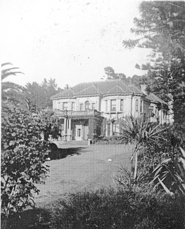
Florence Court, c.1913.

ton, and returned some years later to live with his mother, great-grandmother and an extended family of about ten people in Florence Court to complete his final two years of education at Auckland Grammar School. His grandmother, Emily Jane McGarry, then lived at 193 Gillies Avenue.

In Florence Court he slept in the room above the billiard room, then known as the Boys’ Room, which contained three single beds and which looked out over the tennis court to the Craig house next door. It was his weekend and holiday job to hand-mow the lawns of the property, for which he was paid about two and sixpence for a week’s work. Halfway through his task, at lunchtime, he had to take a bath before joining the family for lunch and then after lunch go out into the garden again and continue with his mowing.

On his walk to the Grammar School he would pass the homes of the Craigs, Caugheys, Mappins, Yates, Cranston Leighton, Doctor Finlay, Sir George Eliot, the Hendersons and the Wilsons, whose house later became Tibbs House, the residence for Auckland Grammar boarders. The Henderson home became Cairnhill Hospital.

Because of his musical talent Robert immediately became the school pianist. Gerry Lee was the then music master. One day as Robert accompanied the school at singing, Mr Lee reprimanded him for not keeping time. Robert explained that he could not see Mr Lee’s hands because his stomach was in the way! He was taken by the ear up on to the stage and put over a chair where he was caned in front of the whole school. Then he returned to the piano and carried on with the accompaniment.

Other teachers at Grammar at that time in 1936–7 were Mr Wedding (‘Dummy’) who taught French and ‘Bandy’ Innes the science master. His form teacher was Frankie Price who wrote and directed operettas. In the production of ‘Leisure Island’ staged at His Majesty’s Theatre in Queen Street for three nights, Robert played the part of ‘Phyllis Frail, worth her weight in gold’. The son of the Reverend de Lisle of Mt Eden also took part and his parents were appalled at the cross dressing.

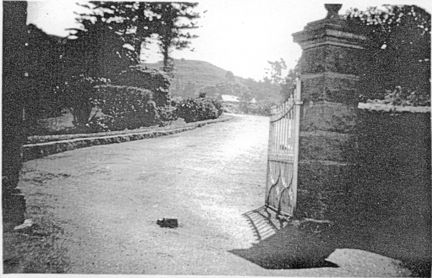
Entrance and drive to Florence Court, c.1913.

The gates opened on to Mountain Road.

Florence Court then stood in four and a half acres of land at the foot of Mt Eden and was self supporting except for meat and milk, having its own orchard and vegetable garden. There were two gardeners, Bob Ness and old Henry, and a live-in housekeeper and her husband. There was a fleet of three cars, one a seven-seater Nash, referred to as ‘the hearse’. Aunt Louisa, daughter of Sarah, was in charge of the flower arranging for the house. Every third Thursday Mrs Felix McGuire was ‘at home’ and afternoon tea was served to visitors. At seven-thirty in the morning the gong went for breakfast. At dinner the meat was cut by the youngest son, Edgar, and the servants always had the first serving.

Robert also recalls that the large house almost directly opposite his old home (then 141 Gillies Avenue, now 35 Owens Road) was trans-ported from Thames after beginning its life as a hotel. It was moved on to the site in Owens Road by his grandfather William Henry McGarry, and Robert’s mother Nora was married from the house.

Though Robert no longer lives in the area he still has strong associations with the present owners of Florence Court which is now a boutique hotel and is listed ‘A’ in the Heritage Trust (a local body classification). Robert has an extensive collection of photographic and other memorabilia from his childhood in the gracious Edwardian house, which was sold in 1939 to the Seabrook family after the death of Sarah Jane McGuire.

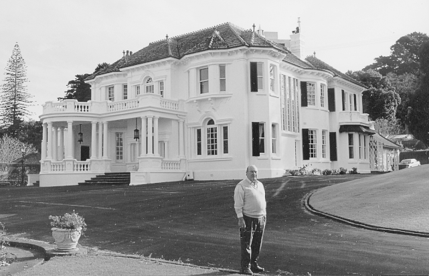
Florence Court today (now a private hotel). Robert Rees in foreground.

The Crossroads

Some recollections of Epsom and Newmarket in the 1930s and 1940s

by R. Graeme Gummer

Right through my school life I lived in the Grammar Zone but I never went to Grammar. We lived opposite the Grammar School in Mountain Road, Epsom, where after school it was convenient for the music master Gerald Lee (a bachelor) to pop over for afternoon tea and cakes with my mother, whilst playing some 12″ records from his large collection. Sometimes we were joined by the school’s long-time secretary, Elizabeth Wells. My father, W.H. Gummer, together with the sculptor Richard Gross, designed the Grammar School War Memorial.

My experience with Grammar boys was not very agreeable. They were all secondary age attending a public school, whilst I was a much younger boy in the uniform and cap of King’s Preparatory School, a private establishment. As I walked alone to Newmarket in the morning I had to run the gauntlet of the older Grammar boys, and try to dodge their jeers as they advanced on me from the opposite direction. My mother’s attitude was unhelpful. Her aim was to impress my teachers by regularly sending them flowers from our large garden, pretty flowers, which I was obliged to carry to school. On such occasions I was the butt of many scathing remarks from the Grammar boys.

Newmarket was where we shopped. It had everything: an ice cream bar, post office, bike shop, cinema, florist, hardware store, shoe shop, electrician, draper, butcher, grocer, chemist, greengrocer, barber, hotel and railway station. The Bon Accord cake shop was my favourite shop. How well I remember the smell of fruit squares and cinnamon biscuits! And, differently, the sawdust floor, bloody meat cleaver, and kauri tree-stump chopping block of Hellaby’s the butcher are recalled!

Another favourite shop was the New American Milk Bar on the corner of Teed Street and Broadway. During World War II, a special ice cream recipe made on the premises became highly popular with American servicemen and local lads. It had to compete with another Newmarket shop, where generous helpings of ice cream were sold by Adams Bruce. Adams Bruce also made fine biscuits, fruit cake, and the famous Queen Anne chocolates.

One Christmas, whilst still at preparatory school, I worked at Hutchinson’s, the grocer. My job was to weigh out bags of sugar, rice, dates, coconut, sago, raisins, sultanas, and tapioca. Mixed fruit, with its portions of orange peel and candied fruit, was in special demand for Christmas cakes, and sometimes I would deem it necessary to test the quality of it by the taste method.

I also had to cut up huge blocks of stiff cheese (none of today’s soft stuff !) — and I still carry a scar on my hand obtained during the process. One cheese variety had big holes in it and was cured with port wine — a very exotic idea to a young lad. Naturally I had to taste the quality of this product as well. These cheeses were kept in the delicatessen bar, so imagine my disgust when cleaning its shelves I found some live maggots. Fortunately they were too small to account for the holes in the Port Wine cheese. Most of the time I just helped carry out the parcels for (what seemed to me to be) little old ladies aged all of thirty-five years! They were glad of my help.

My first job, at twelve years old, was delivering Christmas telegrams for the Newmarket Post Office. For this purpose I was equipped with a crescent-shaped leather bag slung from a shoulder strap. Despite Epsom’s hills, I sped around on my push bike having great fun, and receiving many kindnesses by way of tips, fruit cake and lemonade from the recipients of the telegrams. I was very proud of my earnings, whatever the job.

Car ownership was far from universal in the 1930s, so most household commodities were delivered by their vendors in a van, truck or horse-drawn cart. Early every morning the distinctive clink of glass bottles would announce the fresh arrival of Ambury’s milk, and before breakfast Buchanan’s newly-baked bread was also delivered by horse and cart. The horse always knew exactly the right place to stop at each house, so as to lessen its driver’s walk to the back door. Sometimes the horse would leave droppings on the road. On these occasions our neighbour Mrs Elliott, armed with bucket and shovel, would surreptitiously swoop down to collect this for her garden. From my bedroom window I watched her.

Deliveries were always made to the ‘back’ door or ‘tradesmen’s entrance’. Fish came once a week and could be kept for a day or two in our ice box — depending on how long it took the ice to melt. Vegetables and groceries were ordered and delivered twice a week. My job at home was to examine the shelves and list our needs; subsequently I have never stopped making lists of things throughout my life.

Some of our purchases were substantial: we bought Bycroft’s biscuits in big tins, flour in large white bags, and sugar in sacks. It was my job to undo the bags and empty the contents into our bins. For the impov-erished, these bags and sacks provided underclothes, haversacks and rain capes during the Depression. The heaviest deliveries were coal in one hundredweight bags (112 pounds or 51kg). Watching the coal man toss these bags around was quite a sight — but I never heard about the back injuries they must have suffered in later life.

My brother Geoff was keen on making explosives. Calcium carbide was placed in an empty Stephen’s ink bottle, a few drops of water were added, a cork was driven home, and a towel was wrapped around the bottle. Within a few seconds, the pressure of acetylene gas blew the cork out like a high-speed projectile. It was all good fun for, though facing each other, our battles were at a ‘safe’ distance.

Every now and then, we’d make a big ‘bomb’ and cover it over with firewood. The resulting explosion was very rewarding to the Gummer boys, but not to our neighbour Miss Commons, whose windows were rattled by the shock waves. In alarm she’d quickly phone our mother.

Occasionally Mrs Elliott would join with her sister Miss Commons in a tennis party. Home refrigeration was a rarity, but Peters’ ice cream was delivered in a canvas bag surrounded by frozen brine. Not wishing to waste melting left-overs at the end of the afternoon, Mrs Elliott invited us boys to enjoy the remainder of the ice cream. We helped ourselves lavishly, over-lavishly to tell the truth, but were dismayed to find the brine by now had mixed with the ice cream. Still, we did our best to show our appreciation of Mrs Elliott’s generosity by making strenuous efforts to consume as much as we could manage.

Sydney Elliott was a solicitor with offices in Warkworth and Auck-land. In the days before metalled roads paralleled the coastline, Sydney travelled north by boat, developing a great affection for the East Coast, and building a house at Orewa beach. During World War II petrol rationing prevented people travelling far for holidays so we regularly camped in the Elliotts’ horse paddock adjoining the beach.

Selwyn Robinson and his wife Mildred lived next door. Being managing director of B.J. Ball, paper importers, he was wealthy. This and the attractiveness of his daughter prompted me, aged five, to propose marriage; unfortunately my offer was rejected. The Robinsons had a special tennis court called en-tout-cas which meant it could be played on immediately after rain — an uncommon feature at that time. Later the Robinsons moved to Owens Road alongside Mt Eden to live in a beautiful residence called ‘The Pines’, since redeveloped into multi-storey apartments.

Dr Smale then came to live next door and allowed continued use of the tennis court. He and his wife were generous in many ways, and often took care of mothers-to-be in need of assistance. Every year I gave the Smales unstinting and unsolicited help in hand-pruning one of their

Front entrance of Stoneways, 46 Mountain Road, where Graeme lived as a boy.

special trees; I did it ever so gently, at night time, and when its peach fruit were at their ripest!

Next to the Smales lived Norman Jones, a merchant. I remember the night he arrived home to find his house burgled. Considerably influ-enced from discovering Norman’s liquor cabinet, the burglar was eventually halted by a football tackle right outside our house. A heavy man sat on his chest until the police arrived.

A.E. Odlin the timber merchant lived next to Jones, and further up the road Fred Wilson, one of the publishers of the NZ Herald. His large home later became the Grammar School boarders’ hostel. Further on was Joe Stanton, a judge, whom my mother would occasionally threaten to call on when my behaviour was abominable.

Round the corner in Gilgit Road were Norman Yates, seedsman, and C.K. Smith of Smith & Smith, who made Anvil paints. My father was always delighted to specify particular colours to be made up by Smith & Smith, using original pigments to create the desired architectural effect. He invariably insisted that white paint should include a dash of black pigment.

The district in its time knew many well-known residents: J.J. Craig,

E.E. Vaile, Miss E.L. Hellaby, Dr Caughey, Professor Thomas (botany and geology) who gave his third name to Withiel Drive, William Heather, Alan Dignan, Arthur Frater, Sir Carrick Robertson, and Sir Frank Mappin who, after farming at Silverdale in the early 1900s, developed the lovely home and grounds called ‘Birchlands’, nowadays better known as Government House. To our rear lived Maggie McCormick in the eminent house called ‘Rockwood’, painted in water colour by Alfred Sharpe in the 1880s. On Armistice Day Maggie used to weep when the brass band in our street played ‘Pack up your troubles in your old kit bag!’ and ‘It’s a long way to Tipperary’. My mother explained that Maggie was a World War I widow.

In World War II, Mrs McCormick made her property over to NZ and American forces for secret defence purposes, and communications. (Sixty years later this information was kindly supplied by ‘Gloria’, a top-notch typist, who at the age of eighteen was employed in uniform as a secretary to the ‘top brass’ officers established at Rockwood.) A sentry was briefly on duty at the entrance to Rockwood. Under the command of Captain Caughey, a group of United States and New Zealand officers used the ‘fortress’ to monitor the advance of Japanese forces, and to plan for action in the event of an invasion.

The Rockwood premises were commodious; they included a ball-room and billiard table. The typewriters were ancient models prone to misbehaviour, and paper was in such short supply that half-size sheets were commonly used. Wartime paper quality was poor. The adjoining building (a former stables) was commandeered by Signals staff on duty 24-hours. They were billeted there. On special occasions, the ‘top brass’ were treated to a formal dinner in the upstairs dining room. A capable Irish cook took command of the kitchen, and meals were served by the WAACs (Women’s Auxiliary Army Corps).

Newmarket was an industrious place with a mixture of residential and commercial activities. These included a Manual Training School for school pupils, a power station, Peters’ ice cream factory, Hardley’s the plumbers, a cooper making barrels for cider, Cashmore the timber merchant, J.H.M Carpenter supplying building materials, and Hayes’ waste metal refinery. Close to the refinery was Mrs Fraser’s house; she was a widow from Scotland. Because (like many at that time) she had no phone, I would call on her with my bike whenever my mother sought her services as domestic ‘help’ in our house. I was appalled by the smell of the refinery fumes which penetrated Mrs Fraser’s house.

A more appetising smell emanated from Kent’s Bakeries in New-market. Kent’s were always busy on a Sunday making fresh bread for Monday. Sometimes we ran out of bread at the weekend and I was sent down to Newmarket on my bicycle to obtain a newly-baked loaf. I was fascinated by the dough-making process and the bakers’ hard labour in producing it; and I would linger near the warm brick ovens to savour the smell when fresh loaves were raked out of them. There were times when the bread arrived home with a hole in the crust where a young boy’s hunger pangs had been unable to resist the temptations and delicious smell of hot fresh bread.

My bike was useful for numerous errands to Newmarket, although it relied on a single rear hub brake. Going down Seccombes Road one day with a basket of empty milk bottles, the chain came off, and with no brakes at all I hurtled across the busy Gillies Avenue intersection head-ing out of control for a corrugated iron gate in J.H.M. Carpenter’s fence. The impact broke both the gate latch and my fall, and after jolting down three concrete steps, I came to a shaky halt. Fortunately both the bottles and my neck were unbroken.

The crossroads I want to tell you about are at the bottom of Mountain Road, joining with Khyber Pass and Park Road. Dr Ernest Roberton was superintendent at Auckland Hospital, and Khyber Pass was a busy tram route, but this never deterred the deaf and elderly doctor from crossing the intersection neither applying his brakes nor looking right nor left. Perhaps there was less traffic in those days, but for a young boy crouched in the back seat, it was a thrilling experience. My eyes were definitely looking right and left, possibly both ways at the same time! On the north-west corner of the crossroads was Edgar Pearce’s garage with petrol ‘bowsers’ as we called them, but the main part of this building comprised a concrete floor used as a skating rink, and known as ‘The Glide’. Here we spent our pocket money and many a happy Saturday evening, our bruises soothed by enthusiasm for learning to skate.

Diagonally opposite was the Lion Brewery, which like other breweries was an essential industry in Auckland’s early history. In those days it was known as Seccombe’s Brewery, and built almost entirely of volcanic basalt rock from Mt Eden’s lava flow, hewn into masonry blocks. Seccombe himself lived in Mountain Road. The Mt Eden aquifer provided a wholesome source of water flowing through underground caves, and this accounts for the location of Seccombe’s Brewery, whose well (still existing) was later used to supplement Auckland’s water supply. For similar reasons the Captain Cook Brewery was located a little further down Khyber Pass.

Born in Mt Eden in 1884, my father grew up in a tradition of homeopathic medicine and natural remedies such as yeast as a general tonic, and senna leaves as a laxative. He encouraged us to supplement our iron intake by eating the astringent fruit of the persimmon trees growing in our garden. Protests that these fruit were meant to be mainly decorative were unavailing. He himself was happy to wait until the fruit were mature to the point of being rotten, when they were (he claimed) quite a delectable treat when accompanied by clotted cream.

Sometimes I was despatched on my bike to obtain fresh brewer’s yeast from the Lion Brewery. It cost about one shilling for a large jam-jar full. It was fascinating to watch the yeast being scooped off the top of huge frothy vats of beer bubbling and brewing below street level. When neon lights became common, a large red lion was displayed at night on the very top of the brewery. Its lifelike appeal was enhanced by a yellow light winking in the lion’s eye.

On the south-west of the crossroads corner were the Auckland Catholic Netball Association’s courts, surrounded by volcanic rock walls. These walls were important to me, for the rocks had lots of little holes in them, ideal for hiding my halfpenny, penny and threepenny pieces. This treasury was ideally situated diagonally across from Miss Cox’s dairy. Miss Cox was in my boyish eyes a short and rather weaselly person. No one could compete with her ability to count or weigh her wares with painstaking accuracy, scrupulously ensuring that none other than herself made any profit. Even so, she lived on a very small income, and I daresay she was pleased enough after school to see me get off the tram, visit my penny bank across the road, and head for her shop.

Above Miss Cox’s place in Park Road were several old wooden houses crowded alongside the railway line. One night, hearing a fire siren and alarm bells, I rushed down on my bike to watch the trauma of one of these houses being burnt to the ground. It was a frightening experience. Further along Park Road, opposite the Auckland Public Hospital, was Miss Aitkenhead’s excellent cake shop. Curiously for those times, it was open on Sundays. Matched only by her prices, Miss Aitkenhead’s reputation as a cake maker was deservedly formidable. However on special occasions my mother would send me on my faithful bike to buy a cream sponge or some chocolate eclairs — and they were delectable. All Miss Aitkenhead’s cooking was displayed on lace doilies on silver stands, but her main grounds for pride was the plate-glass window front, prominently emblazoned with red and blue heraldry and masses of gilt lettering proclaiming ‘By Appointment to Viscount Jellicoe, Governor

General of New Zealand’. It was the nearest I came to royalty!

Memorials and Memories

It is heartening to note the growing honour and respect accorded Anzac Day by the younger generations of New Zealanders. A time when people in this country can look back with pride on the achievements of their forebears, and the sacrifices they made to write their country into the pages of world history.

On the corner of the Marivare Reserve at Ranfurly Road there is a memorial arch dedicated to the boys of Epsom who gave their lives in

Four generations at the memorial arch:

Catherine Fénelon, Mavis Fénelon, Florence Cooper (wife of Leonard), Sue-Ellen Fénelon, Hayley Ewen (baby), Amelia Ewen (in front).

the First World War. A special memorial because it was created from the natural scoria rock of the district and built as a simple, yet touching reminder of those young men.

My uncle, Josiah Cooper, has his name etched on one of the memorial plaques, and is buried at St Sever’s Cemetery in Rouen, France. I have visited his grave on several occasions and at one point considered the possibility of bringing his remains back to the country of his birth, but it is better that he should continue to rest with his comrades in that peaceful war cemetery surrounded by graceful trees and beautiful gardens.

Each year, on Anzac Day, my family and I place a small wreath of green leaves at the Marivare arch in recognition of Josiah and his Epsom comrades, and recently we took one of our grand-daughters to visit his grave in Rouen. I often wonder what part those fine young men would have played in the future of Epsom, had they survived.

Josiah and my father (Leonard Worrall Cooper), were born in a cottage in Ranfurly Road at the turn of the last century. Their father was

Leonard Worrall Cooper, Mounted Rifles, c.1917.

from the Worrall family who owned a farm near Greenwoods Corner, and their mother, Amelia, was one of the Bushell farming family from Howick. The Worrall family was very active at St Andrew’s Church, and Worrall and McKinstry helped to establish Gardner Road Presbyterian Church. One of their cousins, Charles Montgomery, was a boarder at St John’s (later to become King’s College) in Pah Road, and walked from there on Saturdays to spend exeat weekends with the family at their home in Ranfurly Road. The boys attended Epsom School and St George’s Sunday School where they received books as prizes for good attendance. When old enough, they joined the Mounted Rifles.*

My grandmother Amelia was fond of horses and grazed her racehorses on land which was subsequently used for the Epsom Teachers’ College. She bought from the Grattan Stable (my favourite being Grattan Thorpe) and would send her horses to race meetings throughout the country — only, on occasion, to have them ‘pulled’ at the last minute for some obscure reason!

She was also a competent businesswoman who owned businesses from Mt Albert to Onehunga. The two little shops in front of what came to be Dr Gillet’s rooms at Greenwoods Corner were started as a fish shop and a sweet shop, and I still have a book of the carefully hand-written recipes which were used to make the sweets. Business came to a halt at Greenwoods Corner when it was discovered that a girl serving in the sweet shop had been pilfering from the till for some considerable time. Incidentally, the future home of Dr Gillet was on the market during the Depression at an asking price of £500. My mother con-sidered buying it, but it did not have any interior doors.

Louis and I have been in Golf Road for 41 years, and three of our grandchildren — Amelia, Hayley and Alexander — the sixth gener-ation of this old Epsom family, live nearby in Market Road.

* The following extract from the ‘100 years ago’ file of the NZ Herald

may give an idea of public attitudes to their military training:

The Auckland Mounted Rifles went into camp of instruction for a week at the Outer Domain on Saturday afternoon, the company occupying a portion of the tents left by the infantry battalion. There was a good muster, Lieutenant Bloomfield — in the absence of Captain Holgate — being in command and Lieu-tenant Wynyard also in attendance.

The major portion of Saturday afternoon was occupied in getting the camp in order, the arrangements being under Quartermaster Sergeant Gelling, but on Monday morning a fair start will be made with instruction, which will be carried out under Captain Reid, district adjutant.

Yesterday forenoon the company, occupied [sic] by the A Battery Artillery, attended divine service at St Matthew’s Church, the Rev W.E. Gillam, who is the company’s chaplain, preaching. After the service the volunteers, at the request of the chaplain, stood up, and the Rev Gillam briefly referred to the losses suffered by our troops in South Africa, paying a warm tribute to the gallantry of the New Zealanders, some of whom had given their lives for the Queen and Empire. Special reference was made to the losses of Rietfontein, where, among the number who had fallen, was Rodney Devereux, son of the Hon. H. De Bohun Devereux, of Epsom, and an old Sunday School pupil of the speaker when in charge of St Andrew’s Church at Epsom.

The reverend concluded his remarks by drawing the attention of those present to the fact that in proportion to the size of the corps, the Auckland Mounted Rifles had, as far as he could ascertain, sent more men to the front than any branch of the volunteer service throughout the Empire, no fewer than 15 members of the company of 60 having responded to the call to arms.

The service over, the Rev. Gillam accompanied the company back to the Domain and lunched with the officers. During the afternoon a large number of friends visited the camp and were entertained to afternoon tea by both the Mounted Rifles and the A Battery.

Plaque detail from photograph above.

A road by any other name:

the riddle of St Andrews Road

by C.E. Keith Fuller

The Auckland-Waikato Historical Journal of September 1986, No.29, on page 83 states: ‘Until the turn of the century St Andrews Road was known as School Road as it led to Mt Roskill District School from the present Normal School.’

From J. Davenport’s book, Street Names of Auckland (1990) the following: ‘St Andrews Road was once Church Street but later came to be named after the church itself, which was founded by Bishop Selwyn in 1846. St Andrew was an apostle and martyr, brother of Simon Peter, and a fisherman.’

On 4 July 1843 Bishop Selwyn purchased in the Epsom district a site for an Anglican church. A chapel (the Epsom Chapel) was built on the site in 1846. It was not only used as a place of worship but also as a school to which the settlers sent their children. St Andrew’s Church was built on this site in 1867.

School Road 1846–1867?

As said, the chapel was used as a school, possibly from 1846 to possibly 1871 ‘when during a severe storm in 1871 it was literally blown down’. Was the church then used as a school until 1886? The first public school built in Epsom was the Epsom District School in 1886. It was built ‘on a block of land facing King George Avenue (then School Road) stretching from Gillies Avenue to The Drive on the other side.’ This school was moved onto its present site in The Drive in 1899 or 1900. In the 103 years of its existence this school has undergone the following name changes:


Epsom District School 1886–1943
Epsom Primary School 1943–1945
Epsom Normal Primary School 1945–1962
Epsom Primary School 1963–1968
Epsom Normal Primary School 1969 to present day

In 1878 at the southern end of School Road the Mt Roskill District School was being built on land set aside by the Wastelands Board for a school and teacher’s residence. School Road stopped short of Mt Albert Road, almost opposite the front gate of the headmaster’s house — the house has since been demolished. On St Andrews Road, a remaining concrete step identifies where the gateway to the house used to be.

Over time the school has had only one name change: from 1878–1943 it was known as Mt Roskill District School (Mt Roskill School); in 1943 it was given its present name of Three Kings Primary School (Three Kings School). In 1972 the Carlson School for Cerebral Palsy moved from its site in Gillies Avenue to a permanent place on the Three Kings School grounds fronting St Andrews Road.

Church Road 18?–1917 (previously School Road)

Did the building of St Andrew’s Church in November 1867 cause a section of School Road to be renamed Church Road? In 1867 the Mt Roskill Highway District boundaries were defined. Selwyn Road (1905) was one of the roads forming the highway’s northern boundary — strangely, Church Road stopped at Empire Road, wherefrom it remained as School Road, to the Mt Roskill school house. Thomas Paton, Chairman of the Epsom District Road Board (1878–82) was ‘having frequently to be reminded that Church Road needed much attention’.

In our Society’s archives is a receipt dated 13 March 1914. It is for a land purchase deposit on a property being bought in Church Road — just a short time before it became King George Avenue. The year 1901 was an important one for the City of Auckland. It was the occasion of a royal visit by the Duke and Duchess of Cornwall — crowned King George V and Queen Mary in 1910. Amalgamation of the Epsom District Road Board into the City of Auckland occurred on 1 February 1917. Seemingly as a consequence of amalgamation, and possible patriotism (World War I was still being fought), some Epsom streets and passageways were named after British royalty (King Edward, King George & Queen Mary Avenues). It seems too that Balmoral Road, previously Patons Road (Mt Eden Road to St Andrews) and on the other side of Mt Eden Road, McNaughtens Road/Lane, was rationalised.

St Andrews Road 1917

Beginning at the Normal Intermediate School gate with house No.1 nearby, St Andrews Road continues due south for 2.8km to meet with Mt Albert Road. The last houses are numbers 280 & 280A. They overlook the St Andrews Reserve on Mt Albert Road, once the location of the Mt Roskill Road Board offices (1883–1947). It is possible that St Andrews Road was extended to join Mt Albert Road during the Great Depression of the 1930s, when ‘unemployed’ were put to work doing a variety of tasks requiring little capital input but much labour.

[The preparation of this paper has not been easy. It is subject to question and correction, particularly some dates, also where some statements made are on my part conjectures.]

Supplementary items of interest

How did the side streets of St Andrews Road come to be named? Starting at the southern end of St Andrews:

  • Rowan Court (to Rowan Road) — ‘The name arose when Ernest Alfred Pearce subdivided here. From Taranaki, he once had a farm where many Rowan trees grew.’
  • Kingsway — A touch of royalty.
  • Gorrie Avenue — Named after Mr T. Gorrie, a farmer and early district settler.
  • Quentin Avenue — Possibly the name of a former landowner. Previously known as Haslett Road up until about 1913/14? Haslett may also have been a substantial landowner in this immediate area.
  • Selwyn Road (1905) — Named after NZ’s first Anglican Bishop, George Augustus Selwyn. Originally named Selwyn Place (18??) so named because ‘it was also planned to create a Selwyn Place linking Selwyn and Buckley Roads with The However, this plan was never realised.’ (Buckley Road was once Buckland Road.)
  • Landscape Road — Originally Boundary
  • Empire Road — Probably recalls to mind the days of the British
  • St Leonards Road (1903) — Once Woodbank St Leonard is the patron saint of pregnant women and prisoners.
  • Watling Street — Probably named after a local landowner, who is buried in St Andrew’s churchyard.
  • Onslow Avenue — ‘Remembers the Earl of Onslow, Governor of NZ 1889–92.’ An early Mt Eden map shows it as Albert Avenue.
  • Merivale Avenue — Remains
  • Balmoral Road — Balmoral — Queen Victoria’s Scottish home. Originally known as the Mt Albert–Epsom Road.
  • Aberfoyle Street — A town in Perthshire, Once Aberdeen Street.
  • Pencarrow Avenue — ‘Sir William Molesworth of the NZ Company had one of England’s most beautiful gardens at “Pencarrow”, his Cornish home.’ Molesworth Station, Marlborough, named after
  • Windmill Road — Built by the NZ Government in 1848 to give settlers growing grain crops, particularly wheat, access to William Mason’s windmill (1844) — Eden Mill, Epsom. Mason sold out to the Rev Walter Lawry some time in 1846. John Bycroft, in partnership with Charles Frederick Partington, purchased the mill from Lawry during 1851 (Bycroft’s Mill). They ran it spasmodically as a flour mill for about eight years. It was then converted to crush bone for fertiliser, closing down in 1863, and was eventually purchased by a Robert Robertson who converted the mill buildings into a dairy, presumably for the processing of cows’ milk?

What became of the drive shafts and gears which turned the grindstones? What of the track that ran around the top of the tower and on which the cap or dome rotated (with fantail if fitted) allowing at all times the mill sails to face into the wind? When was all this equipment removed? It wasn’t until 1953 that the complete destruction of this windmill occurred when the surviving remnant — the scoria tower — was demolished. This mill, ‘was formerly sited on the common boundary of 27/29 St Andrews Road.’

Note: Rory Sweetman (Spire on the Hill ) writes — ‘the large sails of the Epsom Mill were removed and it was converted into a defence point by local militia.’ No date is given but presumably this was to do with the Land Wars of the 1860s.

  • Disraeli Street — ‘After Benjamin Disraeli (1804–81). A British statesman and novelist. Prime minister in 1874 and again in 1880.’
  • Auckland Normal Intermediate (formerly Normal Intermediate School) and Auckland College of Education (formerly the Auckland Teachers’ College and Secondary Teachers’ College) are sited on land once reserved as being the site for a lunatic asylum.
  • Melville Park — Developed in 1932 as an unemployment relief project. Once called Epsom Plantation, then Epsom Domain, now named after Councillor Ellen Melville (1913–46).

SOURCES

 Part of NZ Maps 783 — deed 208 — old land claims.

Auckland City Street Names, Auckland City Libraries and website. Baker, Jack, My Epsom Patch, 1996.

Barr, J., The City of Auckland, Whitcombe & Tombs, 1922.

Centennial 1878-1978, Three Kings School, 1978.

Davenport, J., The Street Names of Auckland, Hodder & Stoughton, 1990.

Epsom Normal Primary School — Centennial Year 1886–1986, Epsom Normal Primary School, 1986.

McConnell,Peter, People and Progress, Auckland, P. McConnell, 1983.

Mt Eden Area, Maungawhau Heritage Walks, 2003.

Prospect: Journal of the Epsom & Eden District Historical Society, Vol. 2, 2003.

Roskill: an illustrated history, Mt Roskill Borough Council, 1984. Stacpoole, John, William Mason the First NZ Architect, Auckland/Oxford

University Press, 1971.

Sweetman, Rory, Spire on the Hill, Auckland, St Andrew’s Parish, Epsom, 1996.

The Changing Face of Mt Eden, Mt Eden Borough Council, 1980.

Three Kings School — 80th Anniversary 1878-1958, Three Kings School, 1958.